
Candidate Interview Tips for a Video / Virtual / Online Meeting
Originally published: September 2016 | Updated: March 2026
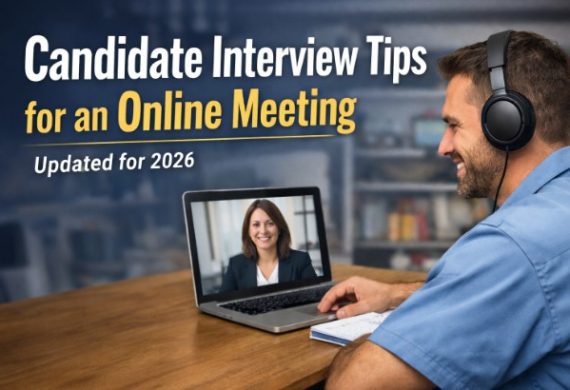
Virtual interviews are no longer a temporary hiring solution or a convenience reserved for early screening. They are now a permanent and essential part of the hiring process across the HVAC industry.
According to the Society for Human Resource Management (SHRM), virtual interviews are now a standard component of modern recruitment and are expected to remain a long-term feature.
After more than 25 years of recruiting HVAC and MEP professionals, one consistent pattern stands out: candidates who intentionally prepare for virtual interviews outperform those who assume the format is informal or forgiving.
1. Treat a Virtual Interview Like an In-Person Interview
One of the most common mistakes candidates make is assuming a virtual interview is less serious than a face-to-face meeting.
In reality, hiring managers evaluate professionalism, preparation, and confidence just as closely–sometimes even more so–when interviews are conducted online.
Candidates should thoroughly research the company, understand its HVAC service mix, geographic footprint, and growth strategy, and be prepared to explain how their experience aligns with the role.
Career advisors from Northeastern University emphasize that preparation and rehearsal significantly improve virtual interview performance.
Virtual interviews also quickly reveal gaps in preparation. Candidates who struggle to describe their responsibilities, reference the wrong company details, or appear unstructured in their responses raise immediate concerns.
Equally important is virtual readiness. Test your internet connection, camera, and the microphone ahead of time.
Indeed recommends testing technology and having a backup plan before online interviews to avoid unnecessary disruptions
2. Present Yourself Professionally on Camera
First impressions matter, even through a screen. Your appearance, posture, and overall on-camera presence shape how hiring managers perceive your professionalism and leadership potential.
Dress as you would for an in-person interview at the company’s office. Business casual or professional attire is typically appropriate for HVAC leadership and management roles. Webex interview best practices confirm that on-camera presentations strongly influence the interviewer’s perception.
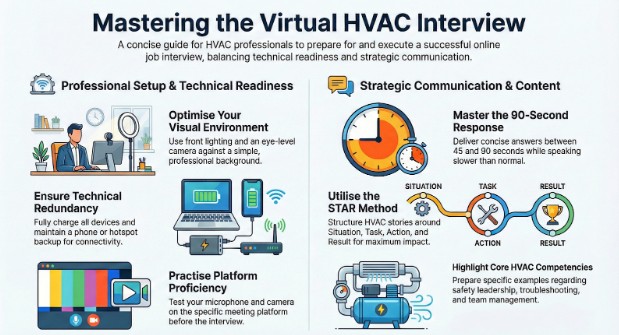
Camera placement and body language are equally important. Position your camera at eye level, sit upright, and maintain eye contact by looking directly into the camera rather than at your own image.
A clean, uncluttered background and proper lighting help keep the focus on you.
3. Master the Technology Before the Interview
Technical issues are one of the fastest ways to undermine an otherwise strong interview.
While occasional glitches happen, repeated issues or visible confusion with basic tools can create doubts about preparedness.
Before the interview, test all equipment, ensure your device is charged, and familiarize yourself with the interview platform.
MIT Career Advising highlights the importance of digital body language and technical readiness in virtual interviews
It is also wise to prepare a backup plan. Keep the interviewer’s contact information accessible and be ready to reconnect quickly if needed.
4. Communicate Clearly and Stay Engaged
Because virtual interviews limit natural in-person cues, communication skills become even more important. Hiring managers pay close attention to how clearly candidates speak, listen, and respond.
Strong candidates speak at a measured pace, pause briefly after questions, and avoid interrupting.
Avoid multitasking or frequently glancing away from the screen, as these behaviors often signal distraction.
5. Prepare for HVAC-Specific and Behavioral Questions
Most virtual interviews include a combination of behavioral and industry-specific questions.
Candidates should be prepared to discuss real situations related to safety leadership, team management, operational efficiency, customer service, and accountability.
Using a structured response method such as the STAR framework helps keep answers focused and relevant.
The Interview Guys recommend this approach for answering behavioral interview questions effectively.
6. Common Virtual Interview Mistakes to Avoid
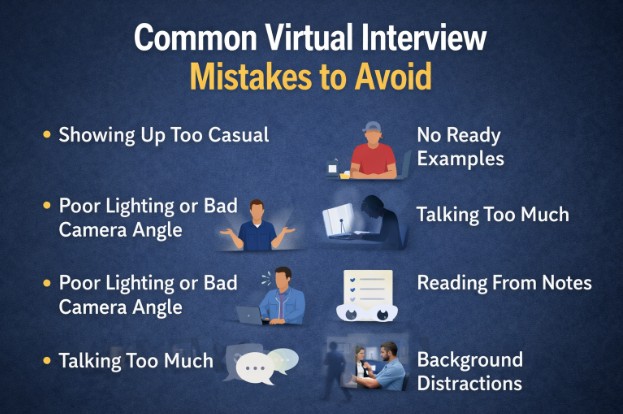
Most virtual interview slip-ups are predictable. The good news is they are also preventable if you treat the call like a real jobsite appointment. Avoid these common mistakes:
- Showing up “too casual.” Dressing down, slouching, or leaning back signals low effort.
- No ready examples. If you cannot quickly share a few real situations. troubleshooting, safety calls, and customer conflicts. You will sound unprepared.
- Bad lighting or camera position. Dark rooms, backlighting, or a camera pointing up from a desk make you look unprofessional.
Talking too much. Long answers bury the point. Keep responses tight, then pause. - Reading from notes. Repeatedly glancing down makes you look unconfident. Use brief bullet prompts only.
- Distractions in the background. Notifications, people walking through, or noise make you seem unfocused.
A little setup and rehearsal fixes most of this in advance.
7. Follow Up Professionally After the Interview
A strong follow-up keeps you top of mind and confirms professionalism. Send a short thank-you email within 24 hours.
Mention one or two specifics you discussed. Restate your interest. and close with a clear next step.
Example close: “If helpful, I can share references or details on similar service calls I have handled.”
Conclusion
Virtual interviews are now part of HVAC teams’ hiring process. The candidates who win are the ones who show up prepared, with a clean setup, job-relevant examples, and clear, confident answers.
Treat the video call like you would a service appointment. Be on time, stay focused, communicate clearly, and follow up the same day or next. That professionalism is what hiring managers remember.
Frequently Asked Questions
How long should a virtual interview answer be?
Most virtual interview answers should be 45 to 90 seconds. Start with the main point, then add one example or detail to support it. Stop and pause. If the interviewer wants more, they will ask a follow-up.
What should I wear for a virtual HVAC interview?
Wear professional, job-appropriate clothing that looks clean on camera. A collared shirt or neat polo is usually best for HVAC roles. Avoid busy patterns, large logos, and hats. Dress one level above what you would wear on the job.
Where should I place my camera during an online interview?
Place your camera at eye level, about an arm’s length away. Frame yourself from mid-chest to just above your head. Face a light source, not a window behind you. A steady camera and neutral background make you look more professional.
Should I use notes during a virtual interview?
Yes, but only brief bullet notes. Keep 3 to 5 prompts for key stories, numbers, and questions you want to ask. Do not read full sentences. If your eyes drop constantly, it makes you look unconfident or unprepared.
What examples should I prepare for an HVAC interview?
Prepare 3 to 5 short stories that show HVAC job performance. Include troubleshooting a system, handling a callback, following safety procedures, explaining findings to a customer, and working with a team. Use the STAR structure. Situation, Task, Action, Result.
What is the best backup plan for technical issues during a virtual interview?
A good backup plan is having the meeting link on your phone and a reliable internet alternative. Keep your phone charged, use headphones, and have a hotspot option if possible. If issues arise, acknowledge them promptly and reconnect within 1 minute.
When should I send a thank-you email after a virtual interview?
Send a thank-you email within 24 hours of the interview. Mention one specific topic you discussed, restate your interest, and thank them for their time. Close by asking about next steps or timeline. Keep it short. 4 to 6 sentences.
How long should I wait to follow up after an interview?
Wait 2 to 3 business days before following up if you have not heard back. Send one short message asking for the timeline and next steps. If they gave a decision date, follow up the next business day after that date passes.